
Care & How-To
How to Care for Olive Wood Kitchen Utensils
By Lesvos Woodcraft · 8/4/2026
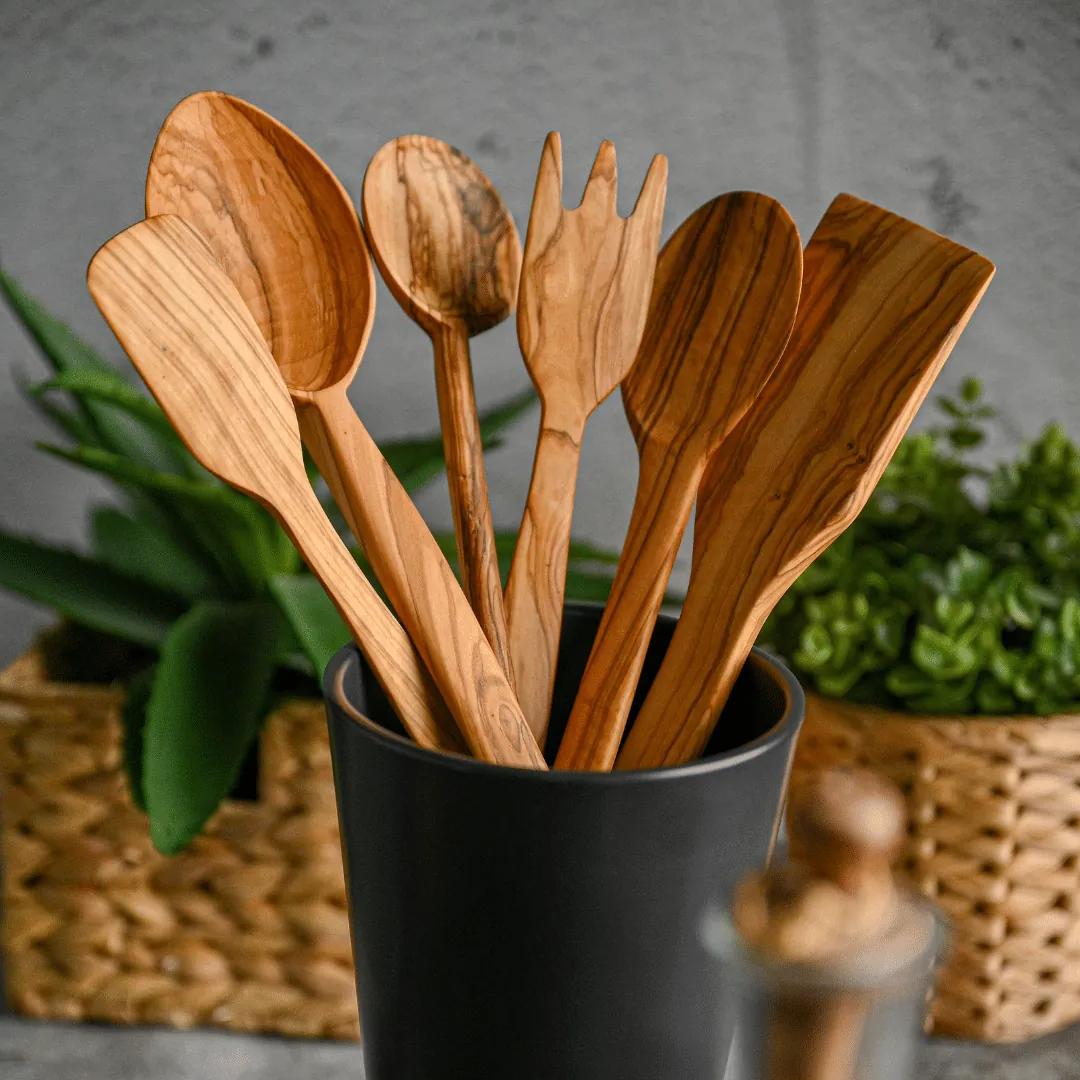
How do you clean olive wood kitchen utensils?
Wash olive wood utensils by hand with warm water and a mild soap, using a soft cloth or sponge. Work in the direction of the grain, and don't let the piece sit in the sink — a quick wash and an immediate dry is really all cleaning takes.
For stuck-on food, a paste of coarse salt and a little olive oil works better than scrubbing. Rub it in, rinse briefly, and dry right away. Skip steel wool and abrasive pads — they scratch the surface and create grooves where grime collects.
Can olive wood utensils go in the dishwasher?
No. The heat and standing water in a dishwasher cycle are enough to warp or crack olive wood, sometimes after just one run. It's the single most common way people damage a good piece.
Do: wash by hand with warm water and mild soap, dry immediately with a towel, and store it somewhere dry with airflow.
Don't: run it through the dishwasher, let it soak or sit in a wet sink, or store it damp in a closed container.
Why do olive wood utensils crack or dry out?
Wood is hygroscopic — it absorbs and releases moisture as humidity changes, swelling and shrinking with it. According to the USDA Forest Products Laboratory's Wood Handbook, cracking happens when that swelling and shrinking is uneven across the grain and the resulting stress outpaces what the wood can hold.
Soaking is the biggest cause. Leave a spoon sitting in dishwater and the wood swells unevenly, which is exactly the stress that leads to a crack later. Drying it too fast in direct sun or next to a heater causes the same problem in reverse. That same moisture question comes up a lot around bacteria, too — we cover the food-safety side of it in Are Wooden Cooking Utensils Sanitary?
How often should you oil or condition olive wood utensils?
Condition olive wood every few weeks with regular use, or as soon as it looks pale, dry, or feels rough. There's no exact schedule — the wood tells you when it needs it.
Plain oil works, but it doesn't last. We use a beeswax-and-cold-pressed-linseed-oil balm on every piece before it leaves our workshop, and we sell the same one — our Olive Wood Care Balm — because it holds up noticeably longer between treatments than oil alone. The linseed oil soaks into the grain; the beeswax seals it in.
Rub a small amount in with the grain, let it sit a few hours (overnight is even better), then wipe off the excess. For the full step-by-step, our care guide walks through application start to finish.
What's the biggest mistake people make with olive wood utensils?
Soaking them. Leaving a spoon in the sink or a bowl of soapy water feels harmless, but it's the fastest way to shorten its life — the wood absorbs water it has no fast way to release evenly, and that's where cracks start.
The second most common mistake is skipping conditioning altogether and only noticing once the wood looks chalky or feels rough. A few minutes with oil or balm every month prevents most of the damage people end up asking us how to fix.
If you're still deciding what material to buy in the first place, our olive wood vs. bamboo vs. plastic comparison lays out the honest tradeoffs.
How do you fix a cracked olive wood utensil?
For a small surface crack, work conditioner directly into it and let it soak in. This won't erase the crack, but it stops it from spreading and keeps the piece usable — most small cracks are cosmetic, not structural.
If the crack runs deep enough to affect how the utensil holds together, that's a different problem. At that point it's worth retiring the piece — or, if it's one of ours, reaching out to us directly, since every piece we make is backed by a 30-day guarantee.
For everything else about the wood itself — sourcing, how it compares to other materials, why it's different — see our complete guide to olive wood utensils.
The full care library
This guide is the overview. Each of these goes deeper on one part of it:
- How to clean wooden spoons — the daily wash, stuck-on food, stains, and odours.
- Can you boil or dishwasher wooden spoons? — what heat and standing water do, and how to rescue a piece that went through a cycle.
- How to fix dry, grey, or fuzzy wooden utensils — oiling and reviving a neglected piece, and when to stop.
- Are wooden cooking utensils sanitary? — what the research says about wood and bacteria.
Frequently asked questions
Keep reading