
Care & How-To
How to Clean Wooden Spoons Without Ruining Them
By Lesvos Woodcraft · 8/16/2026
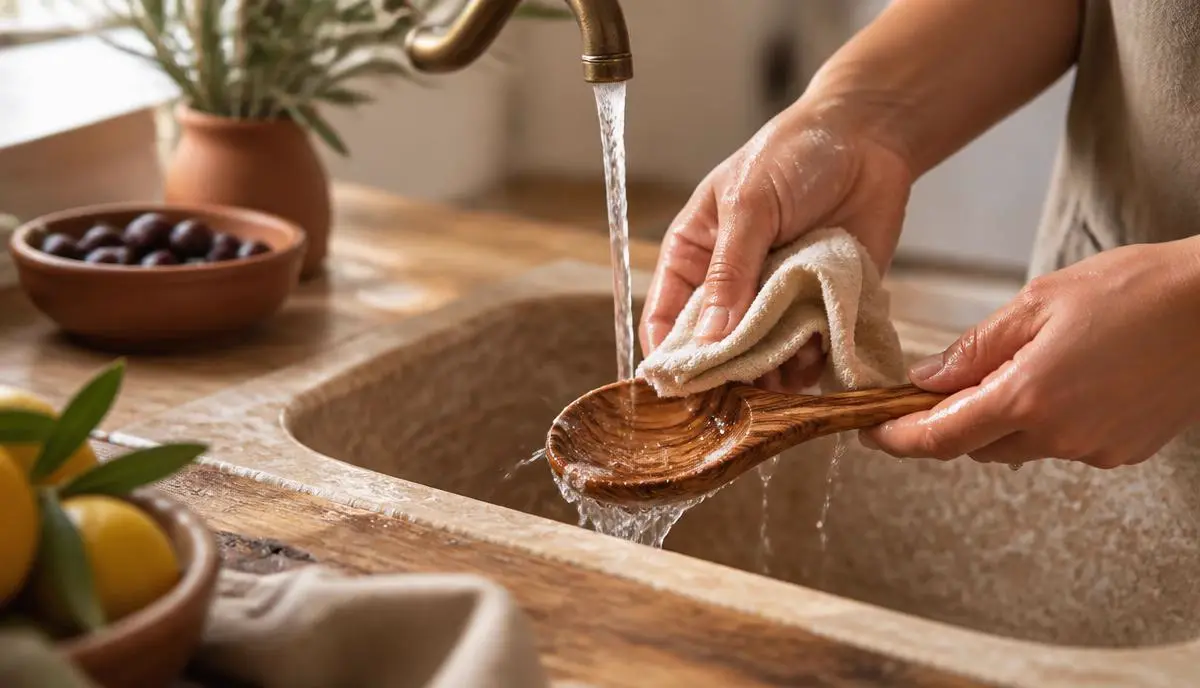
The daily wash: warm water, mild soap, immediate dry
Cleaning a wooden spoon takes under a minute. Rinse it under warm water, wipe it with a soft cloth or sponge and a small amount of mild dish soap, working in the direction of the grain, then dry it right away with a towel.
That last step is the one people skip, and it matters more than the soap. Wood absorbs and releases moisture as it sits; the damage comes from water lingering in the grain, not from a quick wash. Dry it, then let it sit somewhere with airflow rather than flat in a closed drawer while it is still cool to the touch.
Soap is fine. Mild dish soap will not hurt the wood or strip a beeswax finish in a normal wash. What hurts is time in the water.
How much margin you have on that routine depends a lot on the wood itself. Softer, open-grained woods — the cheap beech, rubberwood, and pine utensils sold in multipacks — drink water quickly and show wear fast. Denser, tighter-grained hardwoods like olive absorb far less, which is one of the reasons olive wood is widely considered one of the better woods for kitchen utensils.
Never let a wooden spoon soak
If there is one rule to keep, it is this one. Leaving a spoon in a sink of dishwater, a soaking pot, or a bowl overnight is the fastest way to shorten its life. The wood swells unevenly as it takes on water, then shrinks again as it dries, and that repeated stress across the grain is what turns into a crack months later.
The same goes for the dishwasher, where heat and standing water do the same thing faster. We cover that in detail in can you boil or dishwasher wooden spoons?
Practical version: wash wooden utensils first, before the pile of pots hits the sink, and set them on a towel rather than dropping them in.
Stuck-on food: coarse salt, not steel wool
For dried sauce, porridge, or anything baked onto the bowl of a spoon, make a paste of coarse salt with a little olive oil and rub it in with your fingers or a cloth. The salt gives you grit without gouging the surface, and the oil keeps the wood from drying out while you work. Rinse briefly and dry.
Avoid steel wool, green abrasive pads, and metal scrapers. They cut fine grooves into the surface, and those grooves are exactly where food residue and grime settle in afterwards — so an aggressive scrub makes the next clean harder, not easier.
If a piece needs real force, soak the pot instead and let the spoon sit dry until the food softens off the pan.
Stains and odours: baking soda or a cut lemon
Turmeric, tomato, beetroot, and curry all stain wood. Most of it lifts with a paste of baking soda and a few drops of water, rubbed in with the grain, left for ten minutes, then rinsed and dried. A cut lemon rubbed across the surface handles both light staining and the garlic-and-onion smell that spoons pick up over time.
Some staining is permanent, and that is worth saying plainly. A spoon that has stirred a hundred pots of tomato sauce will carry some of it. That is patina, not dirt, and it has no effect on how the utensil performs.
Skip bleach and harsh chemical cleaners. They dry the wood out and leave a taste behind.
What about sanitising?
This is the question we get most often, and the honest answer needs more room than a paragraph — so we wrote it up separately in are wooden cooking utensils sanitary?, which walks through what the research actually shows about wood and bacteria.
The short version for your daily routine: a proper hand wash with soap and warm water followed by a thorough dry is what keeps a wooden spoon clean. Drying is a genuine part of the hygiene, not just a step to protect the wood.
Does the type of wood matter?
Yes, more than most care advice admits. Wood species differ in density and porosity, and both change how a utensil handles daily washing.
Olive wood is a dense hardwood with a tight, closed grain, so it takes on less water than softer open-grained woods and holds its surface longer. Cheap multipack utensils are usually made from fast-grown softwoods or loosely grained hardwoods that soak up water, fuzz up after a few washes, and split sooner. Beech, maple, and acacia sit somewhere in between.
This is not a claim that olive wood is indestructible — every hardwood utensil still needs a hand wash, an immediate dry, and regular conditioning. It just means the same mistake costs you less on a dense piece than on a porous one. If you are weighing materials before you buy, our olive wood vs bamboo vs plastic comparison lays out the tradeoffs, and every piece in our olive wood utensils collection is carved from Lesvos olive wood.
When cleaning is not the problem
If a spoon still looks pale, chalky, or feels rough after a wash, it is not dirty — it is dry. No amount of additional cleaning fixes that, and scrubbing at it makes the surface fuzzier.
What it needs is conditioning: oil or a balm worked into the grain. We go through the whole process in how to fix dry, grey, or fuzzy wooden utensils, and we sell the beeswax-and-linseed-oil Olive Wood Care Balm we use on every piece before it leaves the workshop.
For the full routine end to end — washing, drying, conditioning, storage — start with our olive wood care guide.
Frequently asked questions
Keep reading