
Care & How-To
What Is a Spurtle? The Scottish Spurdle, Explained
By Lesvos Woodcraft · 6/10/2026
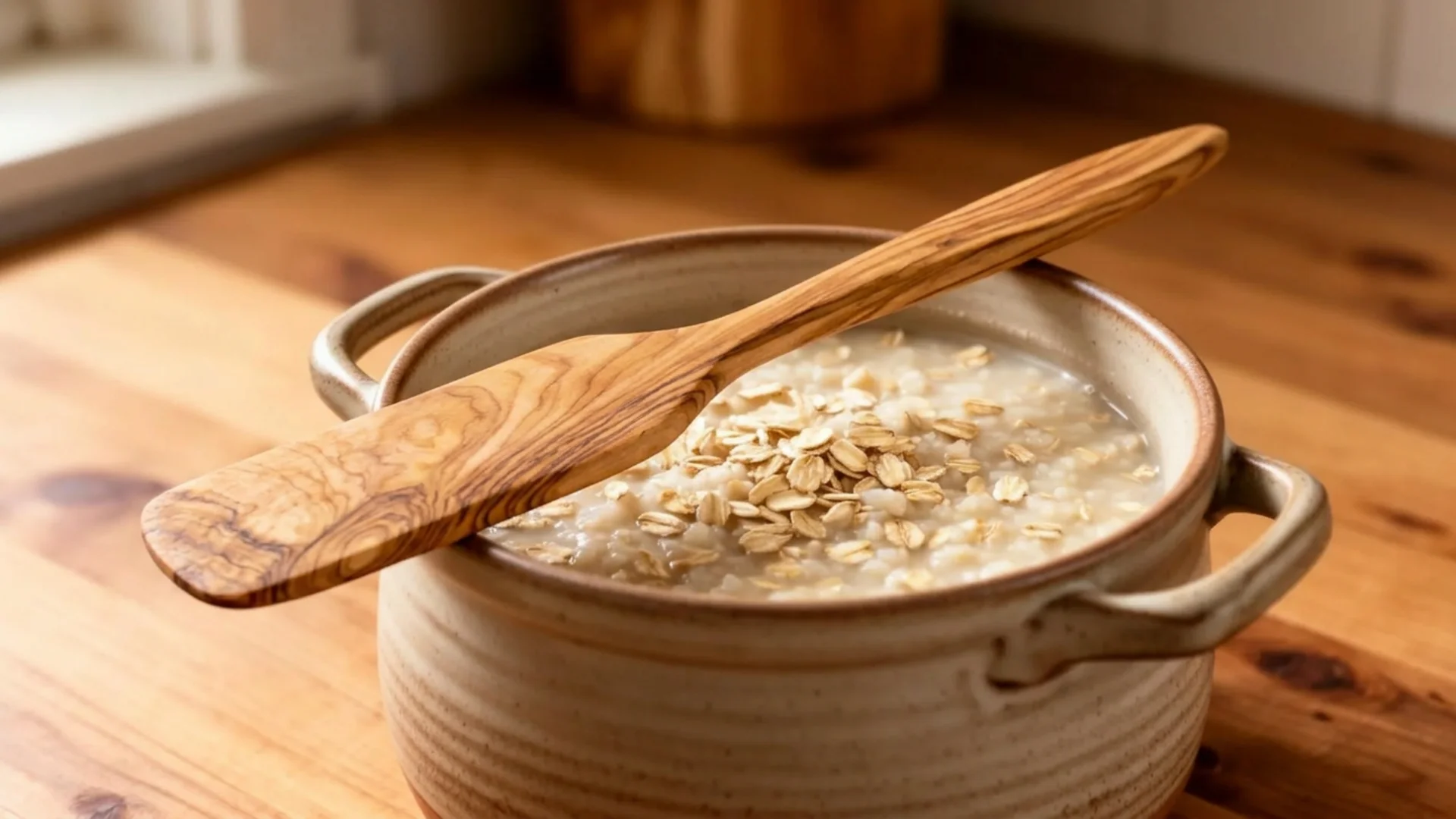
What Is a Spurtle (or Spurdle)?
A spurtle is a slim, rod-shaped wooden kitchen tool that originated in 15th-century Scotland. You may also see it spelled spurdle, spirtle, or spurtal — they all refer to the same utensil. Traditionally it was used for one job above all others: stirring porridge.
Unlike a spoon, a classic spurtle has no bowl. It's essentially a thick wooden dowel, sometimes with a small carved thistle or knob at the top. That simple shape is the whole point — there's no wide surface for thick oats to cling to and clump around, so your porridge stays smooth and lump-free.
Spurtle vs. Spurdle vs. Spoon — What's the Difference?
The words spurtle and spurdle are simply two spellings of the same Scottish tool; spurtle is the more common spelling today. The real difference worth knowing is between a spurtle and an ordinary spoon.
- A spoon has a bowl. It's built for scooping and serving, but that bowl drags through thick mixtures and collects sticky residue.
- A spurtle is a stirring rod. It cuts through porridge, sauces, soups, and risotto with almost no drag, so nothing sticks and nothing clumps.
- A spatula is for flipping and scraping flat surfaces — a different job entirely.
Think of a spurtle as the tool you reach for whenever you're stirring something on the stove that you don't want to turn gluey.
What Is a Spurtle Used For?
Porridge made spurtles famous, but the tool earns its place on the counter far beyond the breakfast pot:
- Stirring oatmeal and porridge without lumps
- Risotto — gentle, constant stirring without bruising the rice
- Gravies, sauces, and roux that need to stay smooth
- Soups and stews that you want to stir without scooping out chunks
- Scrambled eggs and polenta
- Loosening browned bits from the bottom of a pan
Because the working end is narrow, it reaches into the corners of a pot far better than a bulky spoon.
Why Olive Wood Makes a Better Spurtle
Most mass-produced spurtles are turned from soft, light-colored woods like beech. They work, but they wear out, stain, and roughen over time.
Olive wood is different. It's one of the hardest, densest woods used for kitchen tools anywhere in the world. Its tight grain and natural oils resist water and bacteria, so it doesn't need varnish or chemical sealants — just food-grade mineral oil and beeswax.
A few reasons olive wood stands out for a stirring tool:
- It won't scratch your pots. Wood is gentle on nonstick and enameled cookware.
- It doesn't transfer heat. The handle stays cool even in a simmering pot.
- It won't hold flavors or odors. Today's porridge won't taste like last night's curry.
- It lasts for decades. With basic care, an olive wood spurtle outlives the person who bought it.
And because each piece is cut from a wild, reclaimed olive tree, no two spurtles share the same grain — dark veins running through pale gold, unique to each tool.
How to Care for a Wooden Spurtle
Caring for an olive wood spurtle takes seconds:
- Hand wash in warm, soapy water right after use. Never put it in the dishwasher — the heat and prolonged water will crack the wood.
- Dry it standing up or flat on a rack so air reaches every side.
- Oil it occasionally. When the wood starts to look dry or pale, rub in a little food-grade mineral oil and let it soak in overnight.
That's the whole routine. Treated this way, a handmade olive wood spurtle stays smooth, sealed, and beautiful for a lifetime of breakfasts. You can read more about properly caring for your olive wood in our care guide.
Frequently asked questions
Keep reading