
Stories & Craft
Olive Wood from Lesvos: What the Wood Carries
By Randall · 5/26/2026
Olive Wood from Lesvos: What the Wood Carries
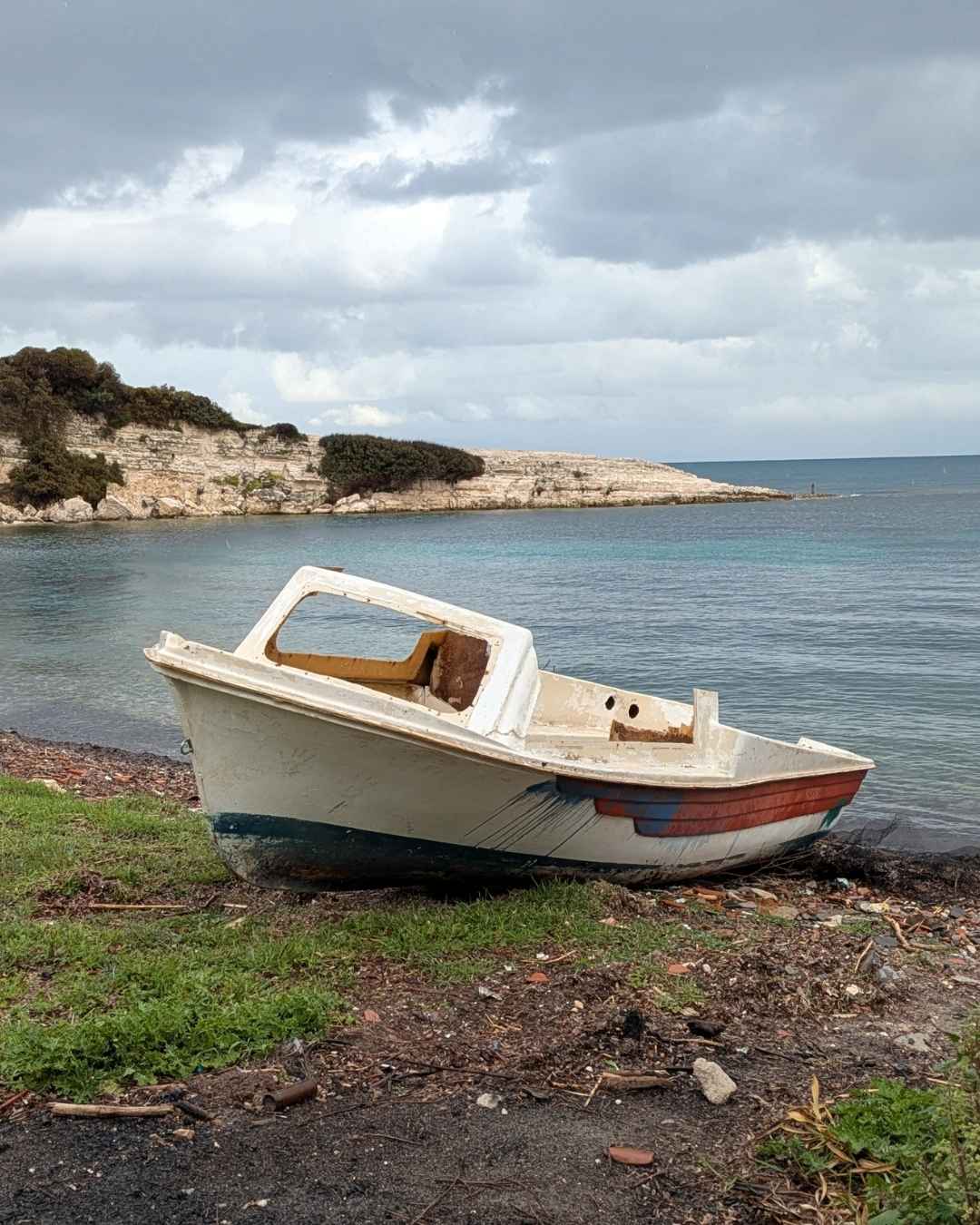
A boat washed up on the shore near our workshop the other day. Empty. Weathered. The sea had pushed it onto the rocks sometime in the night, and by morning it was just sitting there in the wind, about a hundred yards from where we work. I stood looking at it for a while. Our workshop is on the island of Lesvos, in the eastern Aegean. We make kitchen tools — spoons, scoops, cutting boards — out of olive wood. The boat on the shore and the wood on our benches don't seem like they belong in the same story. But on this island, they do.
The Island
Lesvos sits about ten miles off the coast of Turkey. It's the third-largest of the Greek islands, shaped a little like an open hand, with two deep gulfs cut into its southern side. Most of the island is covered in olive groves — somewhere around eleven million trees, by most counts. Some of them are older than anyone can say for certain. People have lived here, farmed here, and sailed from here for at least three thousand years. The Aegean has carried traders, soldiers, exiles, pilgrims, and refugees across these waters for most of recorded history. The boat on the shore is part of a much older story than the one on the news. Our workshop sits in the middle of all of that — close to the sea, surrounded by olive trees, in a place that has always been a crossing point.
The Wood
Olive wood is one of the hardest, densest woods used for kitchen tools anywhere in the world. The grain is tight and full of movement — dark veins running through pale gold, no two pieces alike. When you sand it down and oil it, it almost looks lit from inside. A few things worth knowing about it: The trees aren't cut down to make spoons. Olive trees are pruned every year or two to keep them producing fruit. The wood we work with comes from those pruning's, and from old trees at the end of their productive life. Most of what we use was going to be burned as firewood before it came to the workshop. Nothing about it requires a tree to die. It's naturally food-safe. Olive wood has a tight cell structure and natural oils that resist water and bacteria. It doesn't need varnish or chemical sealants. We finish ours with food-grade mineral oil and beeswax, and that's all it needs. It lasts. With basic care — a wash, a dry, an occasional rub of oil — a piece of olive wood will outlive the person who bought it. We've seen tools in old Greek kitchens that have been in daily use for fifty years and still look beautiful. It's local. Every piece in our workshop came from somewhere on this island. We know the groves. Often we know the farmer. And there's the older layer: some of these olive trees were standing in the time of Christ. The wood itself carries that. It's not a sales line — it's just true.
The Workshop
The men who make our products came to Lesvos the same way that boat on the shore came — across the water, from somewhere else, with very little. Most of them came from Syria, Afghanistan, and parts of Africa, fleeing things no person should have to flee. They are not a story. They are carpenters, fathers, husbands, neighbors. They show up to work in the morning, drink coffee, talk about their kids, and then spend the day shaping wood with their hands. Work is a tremendously dignifying thing. The ability to provide for your family, to use the skill in your hands to make something useful, to be needed somewhere — that's not a small thing. For a man who lost everything, it might be the largest thing. We're a small workshop. Three-five full-time artisans, a handful of products, one shipping warehouse run by my nephew back in Indiana. We are not a factory. We are not a brand built by a marketing team. We are people on an island, doing real work, sending it across the ocean to people who want to know where their things come from.
What the Wood Carries
The boat on the shore is going to sit there for a while. Eventually someone will move it, or the next storm will take it back out. The men in our workshop will keep showing up. The olive trees will keep growing. The wood will keep arriving in our shop — knotted, beautiful, ready to become something. A spoon is a small thing. But it carries an island, a tree, a pair of hands, and the long story of a place that has always known how to receive what comes ashore and turn it into something useful. That's what we do here. That's the wood.
Frequently asked questions
Keep reading