
Stories & Craft
Exploring the Artistry of Handmade Olive Wood Utensils: How Supporting Refugee Artisans Creates Positive Social Impact
By Lesvos Woodcraft · 9/30/2024
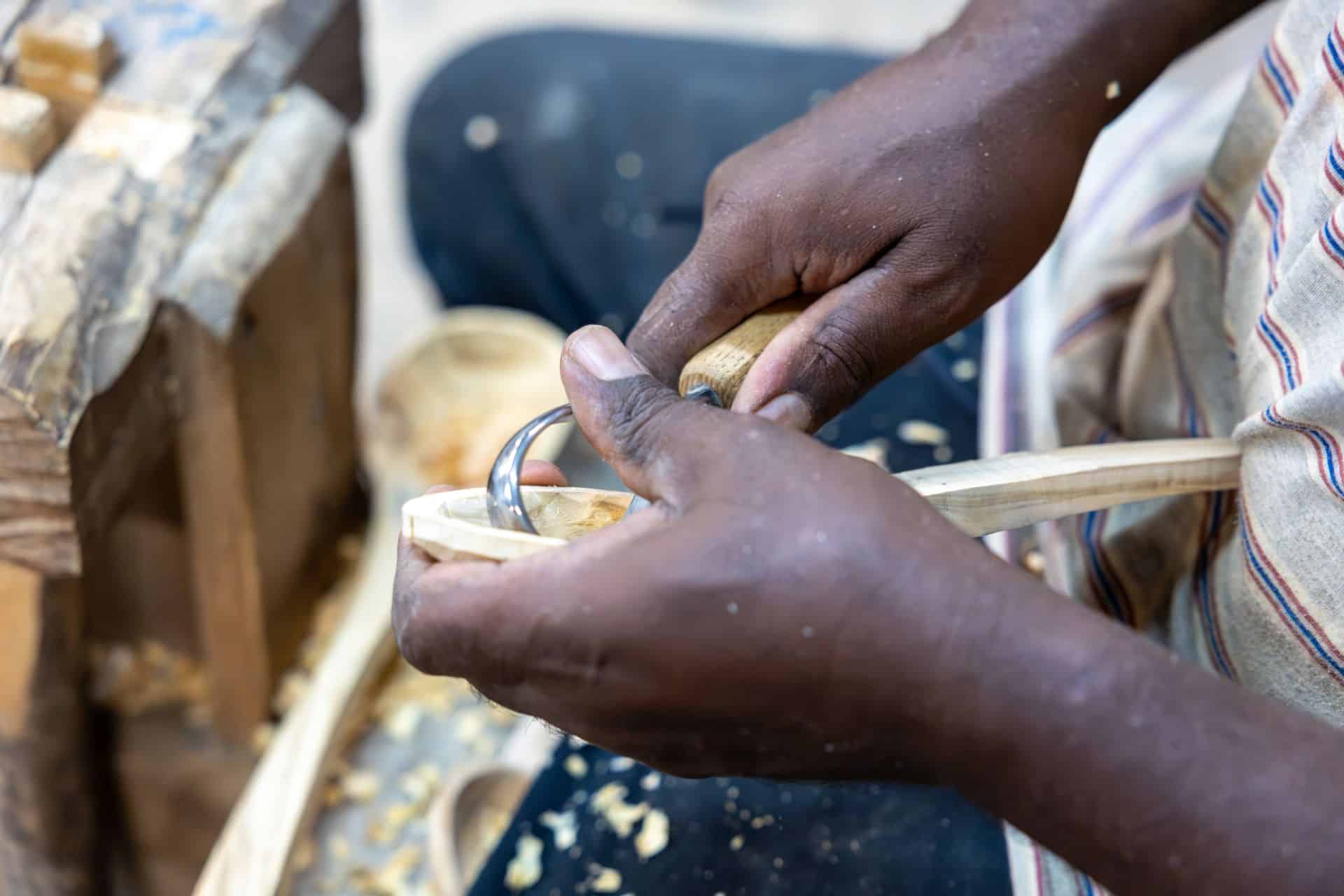
What makes handmade olive wood utensils special?
Handmade olive wood utensils stand out for three reasons: the material, the maker, and the meaning.
- The material. Olive wood is dense and tight-grained, with natural oils that resist bacteria and keep the wood from absorbing flavors or odors. Each piece has a unique color and grain, so no two spoons are alike.
- The maker. Every spoon is shaped by hand, not stamped out by a machine. That care shows in the balance, the smooth finish, and the durability.
- The meaning. Our utensils are carved by refugee artisans, so each one carries a story of resilience and a fair-trade purpose.
Unlike plastic or metal, olive wood is biodegradable and renewable, making it a more sustainable choice for everyday cooking.
Why is olive wood a good material for kitchen tools?
Olive wood is one of the best woods for kitchen utensils for practical reasons:
- Naturally hygienic. The wood's natural oils help resist bacteria, which matters for tools that touch food.
- Low porosity. It absorbs far less than other woods, so it won't hold onto garlic, fish, or strong spices.
- Gentle on cookware. Wood won't scratch nonstick pans, enameled cast iron, or wooden bowls.
- Long-lasting. With a little care, a good olive wood spoon can last for decades.
Much of the wood comes from prunings and trees that no longer bear fruit, so harvesting it doesn't mean cutting down healthy groves.
How are olive wood spoons made?
The process uses traditional woodworking techniques passed down through generations:
- Selecting the wood. Artisans choose quality olive wood blocks, often from pruned or retired trees.
- Carving by hand. Using hand tools, they shape each piece, working with the grain rather than against it.
- Sanding. The surface is smoothed in stages to bring out the natural pattern.
- Finishing. Pieces are sealed with food-safe natural oils — no synthetic coatings or harmful chemicals.
Because each spoon is finished individually, small variations are a feature, not a flaw — they're the signature of true handcraft.
Who are the refugee artisans behind these utensils?
Our utensils are made by artisans who have been displaced from their homes by conflict, persecution, or disaster. Many arrived with deep woodworking skill but faced steep barriers: language, lack of recognized qualifications, and limited access to stable work.
Giving these makers a craft to practice does more than provide income. It restores dignity, rebuilds routine, and preserves cultural heritage that might otherwise be lost. You can read more about our workshop and mission on our about page.
How does buying these utensils create social impact?
Choosing a handmade olive wood utensil from a fair-trade workshop has a direct, measurable effect:
- Stable income lets artisans support their families and plan ahead.
- Fair wages mean makers keep a larger share of what their work is worth.
- Skills and training help them grow toward long-term independence.
- Visibility for their craft encourages a more inclusive, ethical economy.
Fair trade is built on transparency, sustainability, and respect — a deliberate alternative to supply chains that exploit vulnerable people.
How can you shop for utensils that genuinely help?
To make sure your purchase has real impact:
- Look for fair-trade practices and transparency about how artisans are paid.
- Learn the maker's story. Reputable workshops are open about who makes their products and how.
- Buy quality over quantity. A few well-made, long-lasting pieces beat a drawer of disposable tools.
- Spread the word. Sharing a maker's story helps more artisans find a market.
You can browse our hand-carved pieces in the kitchen utensils collection.
Frequently asked questions
Keep reading